
A successful procurement professional plays a strategic role in driving organizational value, controlling costs, and ensuring supply continuity. In today’s competitive and dynamic business environment, procurement is no longer limited to purchasing goods and services; it has evolved into a value-adding function that requires a blend of analytical, interpersonal, and strategic skills. The following paragraphs outline the key skills required for a procurement professional.
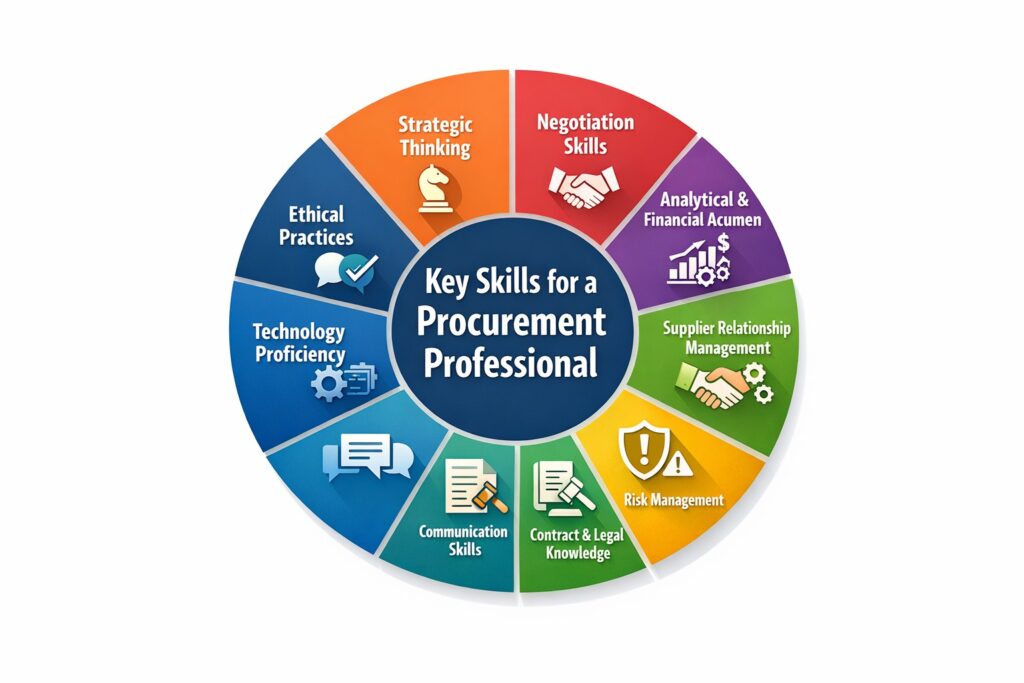
Strategic Thinking and Planning
Procurement professionals must think beyond short-term purchasing needs and align procurement strategies with overall business objectives. Strategic thinking enables them to forecast demand, assess market trends, develop sourcing strategies, and build long-term supplier partnerships. They must understand industry dynamics, risk factors, and global supply chain trends to make informed decisions that support organizational growth.
Negotiation Skills
Negotiation is one of the most critical competencies in procurement. Professionals must negotiate prices, contract terms, delivery schedules, payment conditions, and service levels while maintaining strong supplier relationships. Effective negotiation requires preparation, market knowledge, confidence, communication clarity, and the ability to create win-win outcomes that deliver value without damaging partnerships.
Analytical and Financial Acumen
Procurement professionals need strong analytical skills to evaluate supplier performance, compare bids, conduct cost analysis, and identify savings opportunities. Financial understanding is equally important to assess total cost of ownership (TCO), budgeting impact, return on investment (ROI), and cost breakdown structures. Data-driven decision-making enhances transparency and improves procurement performance.
Supplier Relationship Management
Building and managing supplier relationships is essential for ensuring quality, reliability, and innovation. Procurement professionals must collaborate closely with suppliers, monitor performance metrics, resolve disputes, and encourage continuous improvement. Strong relationship management fosters trust, improves supply stability, and may lead to better pricing and innovation opportunities.
Risk Management Skills
Supply chains are vulnerable to disruptions caused by geopolitical issues, market volatility, regulatory changes, or natural disasters. Procurement professionals must identify, assess, and mitigate risks through diversification, contingency planning, and compliance monitoring. A proactive risk management approach helps maintain business continuity and reduces operational exposure.
Communication and Interpersonal Skills
Procurement involves constant interaction with internal stakeholders such as finance, operations, and senior management, as well as external vendors. Clear communication ensures that requirements are understood, expectations are aligned, and issues are resolved effectively. Strong interpersonal skills also help in conflict resolution and stakeholder engagement.
Contract Management and Legal Knowledge
Understanding contract terms, legal implications, and compliance requirements is vital. Procurement professionals must draft, review, and manage contracts to ensure that organizational interests are protected. Familiarity with regulatory frameworks and ethical standards reduces legal risks and ensures adherence to corporate governance principles.
Technological Proficiency
Modern procurement relies heavily on digital tools such as ERP systems, e-procurement platforms, data analytics tools, and automation software. Professionals must be comfortable using technology to streamline processes, manage supplier databases, track performance, and generate reports. Digital literacy enhances efficiency and supports strategic decision-making.
Ethical Standards and Integrity
Procurement professionals handle significant financial transactions and supplier relationships, making ethical conduct essential. Transparency, fairness, accountability, and adherence to procurement policies safeguard the organization’s reputation and prevent fraud or conflicts of interest.
In conclusion, a procurement professional must possess a balanced combination of strategic insight, analytical ability, negotiation expertise, technological knowledge, and strong ethical values. As procurement continues to evolve into a strategic function, professionals who continuously develop these skills will contribute significantly to organizational success and sustainable growth.